Educationalist Sir Ken Robinson, known to millions for his work on creativity in schools, yesterday shared his thoughts on outdoor play.
The 20-minute talk, in a video recorded as part of the Dirt is Good campaign sponsored by Persil (in the UK) and Omo (in many other countries), gives some powerful messages to parents about why play matters for children’s development and learning. This post shares some edited highlights from the talk. You can stream the full talk at the end of the post.
This post shares an idea from a parent who was frustrated that her kids were finding it hard to have much fun in their local playgrounds. I’ve called it the Mary Poppins playground kit, for reasons that should become obvious.
At the end of this post, I will say more about why I like the Mary Poppins playground kit so much. First, the idea itself, in the words of the parent herself (whose chosen name is Djindjer): Continue reading →
I am on record as saying that I am no parenting guru, and that there are too many people trying to tell parents how to do their job. So why did I recently agree to give FQ magazine – “the essential dad mag” according to its website – my six top parenting tips? (And no, it wasn’t because they paid me!)
The thread that links all my work is that children want and need to expand their horizons: to have everyday experiences of freedom, adventure, exploration and responsibility as they grow up. It is the core of my vision of what a good childhood looks and feels like.
Most of my work to achieve this vision focuses not on parents, but on all the other people and institutions that influence children’s lives: schools, educators, residents, voluntary organisations, play and leisure services, charities, regulators, designers, planners, campaigners, local and national governments and the media.
The simple truth is that for this vision is to become reality, it must resonate with parents. Without their active support, everyone else will lose interest in the topic. The bottom line is this: if parents do not care about their children’s everyday freedoms, why should anyone else? (a point I made in a 2011 post written with UK play advocates in mind).
So parents’ views do matter to me. But I also think parents today have a hard time. Everyone seems to have an opinion about the right way to bring kids up. What is more, when things go wrong there is a long queue ready and waiting to judge parents, in both the mainstream and social media.
In this weekend’s Guardian, columnist Tim Lott writes about how his seven-year-old daughter ended up in hospital with a nasty injury after a cycling accident that was entirely his fault. He had been giving her a lift on the back of his bike, and her foot got horribly caught up in the wheel.
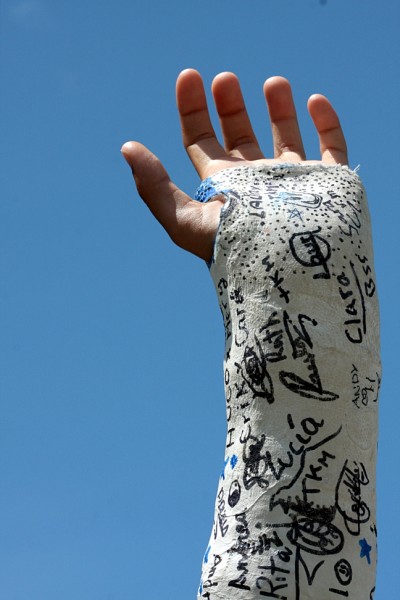
The Health and Safety Executive – the nation’s safety regulator – is so often the fall guy for everything that is wrong about the way risk is managed. But last week I heard an anecdote that brought home to me – in an unexpected way – the positive role HSE is playing in building support for a balanced, thoughtful approach to risk in children’s play. I was running a workshop on risk-benefit assessment at a playwork conference, and one of the participants – a manager of an after-school club – shared a revealing story. It begins last September, with a boy breaking a limb.
Today the National Trust’s Outdoor Nation website posted a piece from me that aims to win parents over to the goal of expanding children’s horizons. I had to think carefully when writing it.
This website is managed by Tim Gill, an independent scholar and global advocate for children’s play and mobility. His work embraces writing, research, consultancy and public speaking.

 Educationalist Sir Ken Robinson, known to millions for his work on creativity in schools, yesterday shared his thoughts on outdoor play.

 Rethinking Childhood