
Calgary is the Canadian big city that looks and feels most like many US cities: sprawling, ever-expanding, and hugely car-centred. The very idea that the built form of the city could be great for children is likely to prompt a raised eyebrow from urban planners, if not outright derision.
I have just spent a week in the city, at the International Play Association conference, and then interviewing people and visiting sites as part of my Churchill Fellowship project looking at child-friendly urban planning. And my top-of-the-head response is that those urbanists would not be far wrong. But could this be about to change?
I’ll come back to that later. First, a thumbnail sketch of the city’s built form. Three broad types of residential neighbourhood form a classic urban typology for the city.


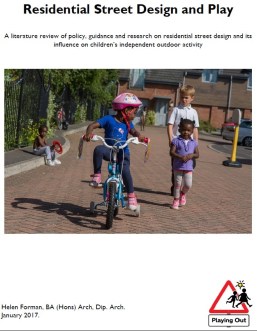 This is a quick share of a very useful report pulling together key research and other material on designing streets for play. The report was written for the campaigning group Playing Out by Helen Forman, an architect in the housing field and volunteer activator for the group.
 Once you leave the classroom, things change. You have less control. Children have more space, literally and metaphorically. So there is a shift in responsibilities. And this can feel frightening.
 Rethinking Childhood