
“Their marvellous environments for cycling did not appear out of nowhere – they are not some innate condition of being ‘Dutch’.” An important history lesson for those of us arguing for more child-friendly streets.

I was struck by two details from yesterday’s blogpost by Mark Wagenbuur, about early protests for child-friendly streets in Amsterdam in the 1970s – details that highlight the importance of the quality of the physical environment for enabling cycling, over and above any prevailing national culture or attitudes.
The first instance was the contentiousness of the changes being proposed to the streets in Mark’s post. One Dutchman, surrounded by children, argued that it was ‘impossible’ to create a street without motor traffic on it. You can see this in the video, about 2:30 in.

These were residential streets, which now have motor traffic filtered out, as Mark describes in his post. This is an almost universal treatment across residential areas in the Netherlands now, but back then, the notion of doing this was evidently completely foreign to this gentleman. These streets were for driving. (These attitudes were reflected…
View original post 790 more words

 On my visit to Moscow last week, I witnessed an intriguing sight as I was crossing a bridge near the city centre. A little girl and her mother were walking towards me. As they went past, the girl stooped down to make a snowball, and then she threw it playfully towards her mother. Not very noteworthy, you may think – except that it was minus 6 degrees Centigrade, with a biting wind and eight lanes of Moscow traffic roaring by just metres away from us. You could not have asked for a clearer example of children’s appetite for play, regardless of their circumstances. So how well does Russia’s capital satisfy that appetite – how child-friendly is it?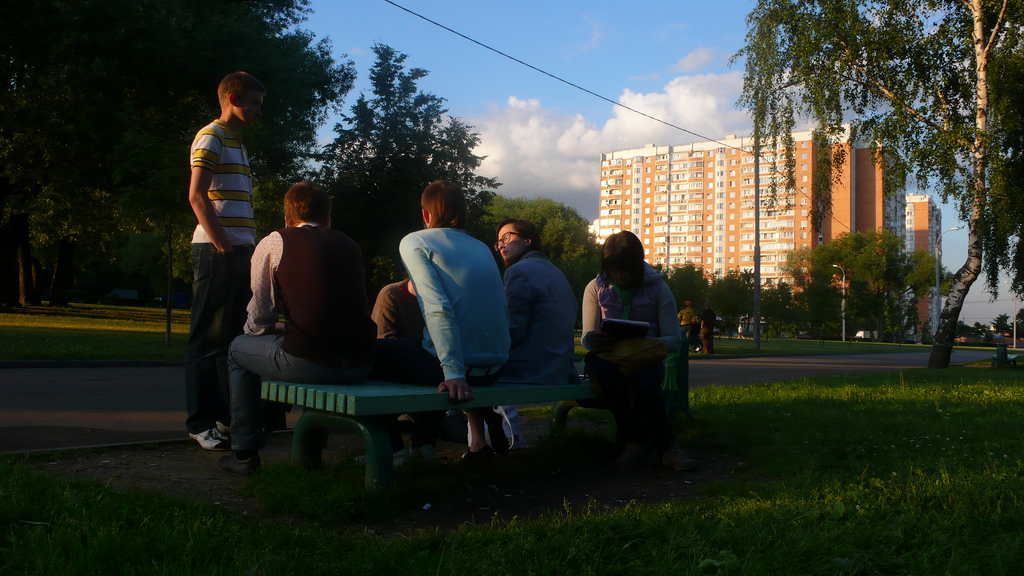


 Rethinking Childhood