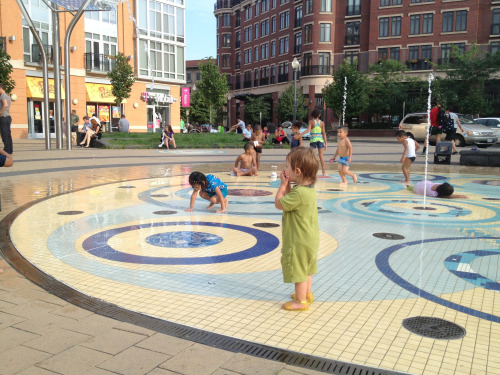
Still reared in captivity

I originally wrote this article for the Guardian in 2004, on leaving the Children’s Play Council (now Play England). Last weekend’s Big Garden Birdwatch prompted me to ask how much the picture it painted has changed in the intervening decade or so. First, I will share the article itself, followed by some reflections.

Embed from Getty Images


Bred in captivity [2004]

This weekend saw the Big Garden Birdwatch, a nationwide survey that has been organised by the Royal Society for the Protection of Birds since 1979. But I can’t help contemplating a survey of a different species: a Big Outdoor Child Watch.

I know only too well what it would find. Chicks are now pretty much extinct, outside their own nest areas and a shrinking number of poorly maintained reserves. Juveniles, common in the 1970s, declined in numbers throughout the 1980s and are now rarely seen away from their parents, except in impoverished areas. And adolescents, though not yet endangered, are seen as pests and controlled accordingly. In sum, children and young people are fast disappearing from the outdoor environment, even though for most this is their preferred habitat.
Continue reading

What are my six top tips for parents – and why did I even write them?

I am on record as saying that I am no parenting guru, and that there are too many people trying to tell parents how to do their job. So why did I recently agree to give FQ magazine – “the essential dad mag” according to its website – my six top parenting tips? (And no, it wasn’t because they paid me!)

The thread that links all my work is that children want and need to expand their horizons: to have everyday experiences of freedom, adventure, exploration and responsibility as they grow up. It is the core of my vision of what a good childhood looks and feels like.

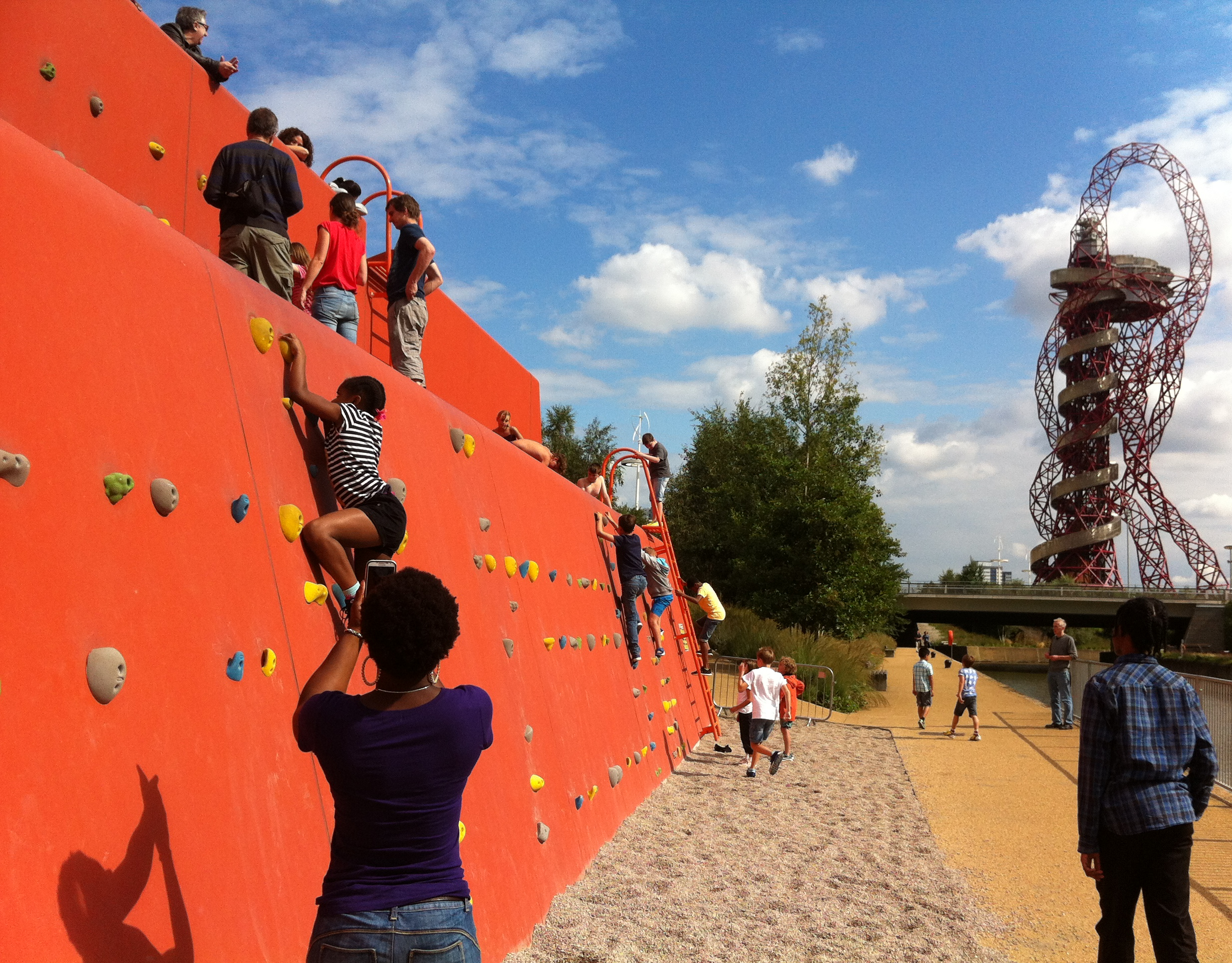
Woman photographing child on Olympic Park climbing wall

Most of my work to achieve this vision focuses not on parents, but on all the other people and institutions that influence children’s lives: schools, educators, residents, voluntary organisations, play and leisure services, charities, regulators, designers, planners, campaigners, local and national governments and the media.

The simple truth is that for this vision is to become reality, it must resonate with parents. Without their active support, everyone else will lose interest in the topic. The bottom line is this: if parents do not care about their children’s everyday freedoms, why should anyone else? (a point I made in a 2011 post written with UK play advocates in mind).

So parents’ views do matter to me. But I also think parents today have a hard time. Everyone seems to have an opinion about the right way to bring kids up. What is more, when things go wrong there is a long queue ready and waiting to judge parents, in both the mainstream and social media.

Continue reading

Bold move to kickstart an outdoor play renaissance in Canada

Last week the Lawson Foundation, a Canadian family foundation, launched an ambitious outdoor play strategy with the announcement of $2.7 million (£1.3 million; $US 1.9 million) in funding for 14 projects.

Lawson Foundation outdoor play strategy graphic

The strategy has an explicit and exclusive focus on unstructured outdoor play. Tackling risk aversion is a prominent theme, building on the Foundation’s recent support for a groundbreaking consensus position statement [pdf link] whose key message is that the biggest risk is keeping kids indoors.

Continue reading

Festive cheer from the land of the free

Could the USA be turning a corner in the global fight to defend children’s right to play? A remarkable pair of legal moves certainly makes it look this way. They add further support for the view that the tide is turning fast in a country with a poor reputation for upholding children’s everyday freedoms.

Continue reading

10 Ways to Build a City for Children • This City Life

A snappy ten-point checklist for a child-friendly city has been pulled together by Vancouver urbanist and writer Jillian Glover. I confess I am cautious about the ‘top tips’ style of writing, which can lead to oversimplification. But this ticked a lot of my boxes.

Continue reading

All party group puts play at the heart of proposed child health strategy

Positive news from parliament for the first time in a long time, with the launch of a new report on play from the All-Party Parliamentary Group on a Fit and Healthy Childhood. Central to the report is its call for the promotion of play as part of a ‘whole child’ strategy. Read more on the website of Adrian Voce, former director of Play England.

adrianvoce's avatarPolicy for Play

A Parliamentary report on children’s play, published today, calls for play to be at the centre of a ‘whole child’ approach to health and wellbeing.

The All Party Parliamentary Group on a Fit and Healthy Childhood, chaired by Baroness Floella Benjamin, today launches its long-awaited report on children’s play.

Announcing the report, the group says that ‘whilst there is broad consensus about the importance of physical activity in the battle against obesity, play (policy) has lost political momentum in recent years and the report calls for a fresh approach’.

In a statement released alongside the report today, Baroness Benjamin says that the group’s ‘proposals on play are ‘integral to a “whole child” strategy for health and wellbeing and should not be regarded as an “add on”. Of course encouraging children to participate in sport is important, but in practice, not all children are “sporty”. Play benefits children of all ages…

View original post 329 more words